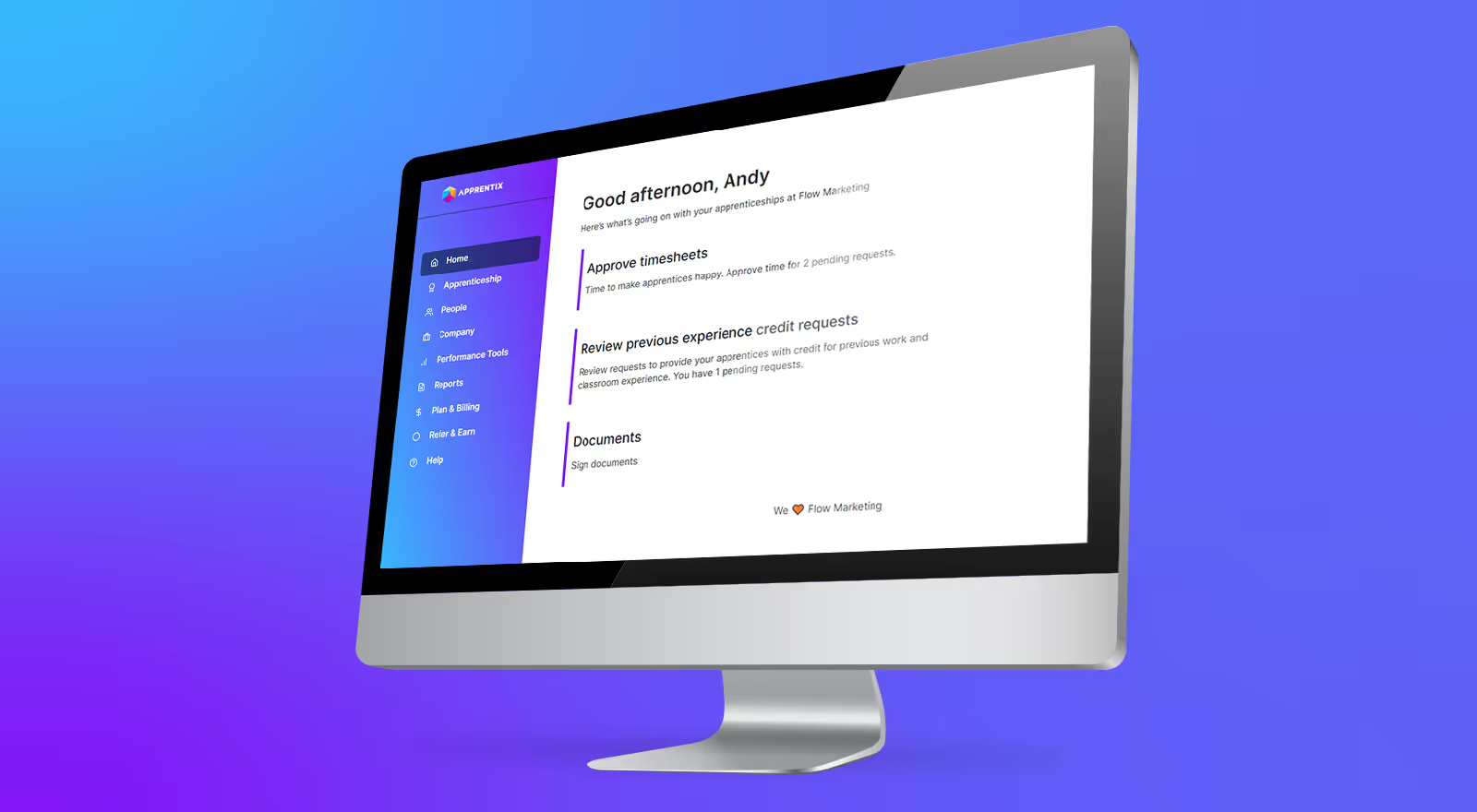

Learn more about apprenticeship software and discover what apprenticeship management tool is right for your company.



You may be familiar with apprentices, but have you heard of apprenticeship software?
For many U.S. companies, apprenticeship program management is part of the daily to-do list. Still, many programs are managed manually – through a confusing mix of spreadsheets, emails, and federal forms.
Apprenticeship software is technology specifically developed to help companies automate the design and management of their apprenticeship programs.
Apprenticeship software is an emerging category. To define it, we must first understand the history of apprentice management.
Apprenticeship software is a specialized platform for planning, tracking, and managing work-based learning programs, replacing the spreadsheets, emails, and federal forms sponsors otherwise juggle. It tracks on-the-job hours, classroom instruction, competencies, and wage progressions, and produces the compliance reporting a registered program owes the Department of Labor.
We've spent years building the software this page defines, and contractors run their programs on it every day. Blue Mountain adds apprentices in five to ten minutes with documents auto-generated, and 2 Bros Resources runs full compliance with one person instead of the four or five they expected to hire. This overview is written from that seat.
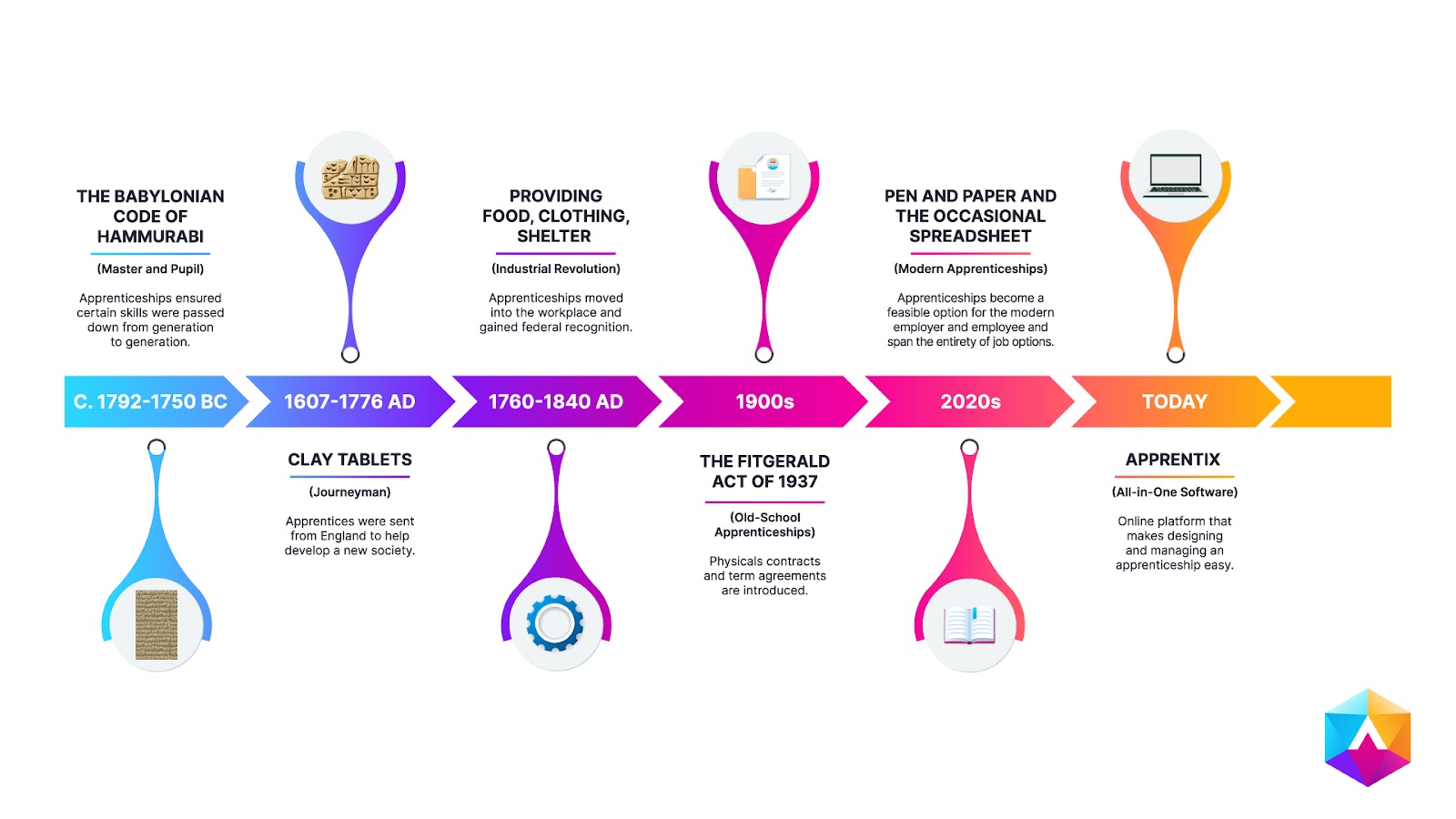
The history of apprenticeships goes back thousands of years, with the first written reference from around 4,000 years ago. The Babylonian Code of Hammurabi details how "artisans teach their crafts to the youth." Apprenticeships ensured certain skills were passed down from generation to generation.
Be glad we have technology nowadays… imagine running your apprenticeship program on clay tablets! Thankfully, much has changed in the past 4,000 years in apprenticeship management tools.
In the American colonies, apprentices were sent from England to help develop a new society. In those days, apprenticeship management included providing food, clothing, shelter.
The Industrial Revolution helped transition apprenticeships from the domestic sphere to the workplace. In 1937, apprenticeships moved to federal recognition through the Fitzgerald Act. The Act introduced physical contracts and an agreement of terms to apprenticeship management. It also led the way for today's Federal Government-assisted apprentice program.
Fast forward: apprenticeships have evolved to provide better value to both the apprentice and the company. Companies have spent time testing apprenticeship management tools – from clay tablets, pencils and pens, excel sheets, and everything in between.
Somewhere over the years, managing a company's apprenticeship program became a complicated, time-intensive, and expensive process.
Apprenticeship software makes running your apprenticeship program easy. By incorporating the tools, strategies, and processes necessary to help businesses better organize and implement modern, high-quality apprenticeship programs, apprenticeship software is designed to cut back on time and expenses.
When evaluating apprenticeship software, it's important to consider which parts of your apprenticeship management system you want to automate.
Are you looking to solely automate apprentice tracking? Do you want to automate apprentice recruiting? Or does your company require a more in-depth apprenticeship software that automates all pieces of the process – from program design and setup to management, tracking, and reporting?
In practice, the category breaks down into five capability areas. This is the checklist behind that "which parts do you want to automate" question:
Tracking-only tools cover the first row. Comprehensive platforms cover all five, plus the design work (job descriptions, on-the-job learning plans, registration paperwork) that happens before an apprentice ever logs an hour.
Most apprenticeship software is designed for companies with existing apprenticeship programs. But in rare cases, the software may also be designed for businesses looking to set up an apprenticeship program from scratch (Apprentix, for example.)
Apprenticeship software is also designed for the various roles within an apprenticeship program.
For sponsors, apprenticeship software can provide apprenticeship overviews, results, and reports.
For mentors, apprenticeship software enables the simple management of their apprentice cohorts.
For apprentices, apprenticeship software becomes their day-to-day workplace where they can stay up-to-date on their classroom hours, On-the-Job Learning (OJL) hours, and with some softwares, even receive certifications.
For managers, apprenticeship software provides an easily-accessible access point to all parts and pieces of the apprenticeship program – from design, recruiting, management, and reporting – depending on the software you choose.
The fastest way to understand the category is by what it isn't.
Versus an LMS: a learning management system delivers course content; it doesn't track real-world work hours, wage milestones, or DoL compliance. An LMS can supply the classroom side of an apprenticeship, and apprenticeship software is what ties those courses to on-the-job hours and program standards.
Versus HR and CRM systems: HR platforms manage payroll, records, and reviews for employees in general. They aren't built around multi-year competency frameworks, journeyworker sign-offs, or percentage-based wage schedules, which is exactly the structure a registered apprenticeship runs on.
Versus spreadsheets: a spreadsheet genuinely works for one apprentice in one state. It breaks the moment you need to prove who approved which hours, run standards across states, or hand an auditor evidence instead of a tab. We've written up the full case in 5 apprenticeship management tools to stop using.
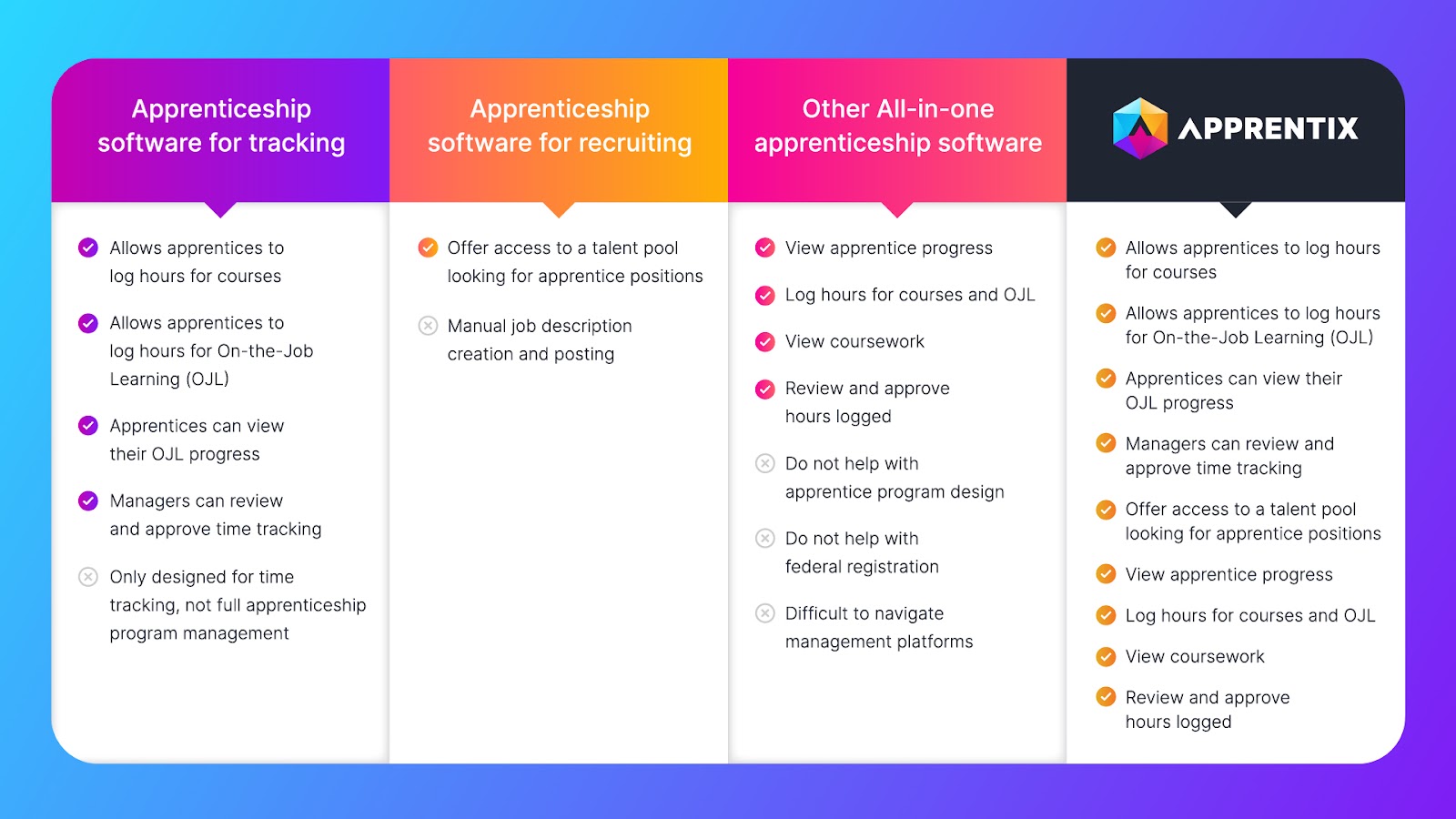
The market splits two ways. Tracking-only tools log hours and progress for a program you've already built. Comprehensive platforms span the whole lifecycle, from designing the program and registering it to managing, tracking, and reporting on it.
There's a third distinction that matters more than either: whether you run the software yourself, or the technology comes wrapped in a sponsor service. In the first model you're the program sponsor and the software is your admin tool. In the second, a sponsor of record holds the program, carries the compliance, and the software is simply how you and your apprentices interact with it.
(This section moves up from inside the Apprentix section below, so the question gets an honest answer before any product mention. Existing copy first, unchanged.)
The age-old question: do I really need it? Our rule of thumb is always "if it helps you do your job quicker, faster, or better," a tool is worth it. You may also consider the ROI of an apprenticeship software.
Honestly, it depends on scale. One apprentice, one state, no prevailing wage work? A spreadsheet and discipline will hold. The need turns real when sign-offs have to be attributable, standards span states, prevailing wage evidence enters the picture, or an audit does. Those are the points where reconstructing records after the fact stops being possible.
And there's a third answer: you may not need to run software at all. If a sponsor of record manages your program, the tracking, reporting, and audit trail are the sponsor's job, and you use the system rather than administer it. That's the model most contractors on IRA projects end up choosing.
Apprentix is modern apprenticeship software for businesses looking to easily design and manage apprenticeship programs. We empower businesses to build their talent pipeline and reduce turnover through high-quality apprenticeships. The full case for the platform, and what to look for when comparing options, is over in what makes Apprentix the best apprenticeship management software.
After spending two years building our own apprenticeship program, we developed software that cuts program design from months to minutes and keeps federally-registered apprenticeships manageable in one place. Today it comes as part of our Fractional Sponsor service: we design and register the program with you during a two-week cohort, your team gets onboarded, and from then on you log in about once a week to review hours, approvals, and progress while we carry the compliance.
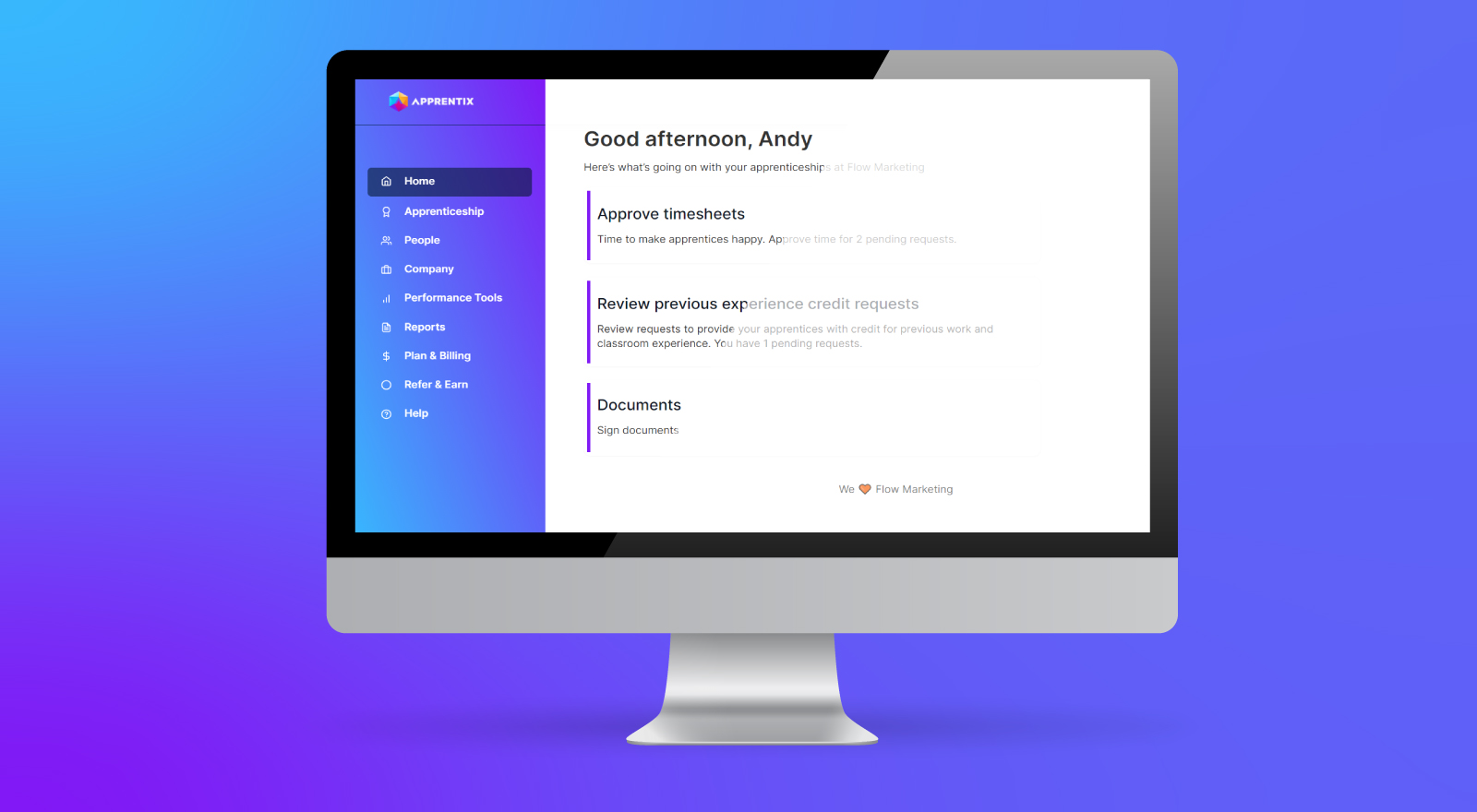
For program design, Apprentix automates:
For program management, Apprentix automates:
How do you determine the success of your apprenticeship program? There are a number of metrics the companies using Apprentix like to track, including apprentice graduation rate, employee turnover rate, and the amount of time it takes to manage a program.
Make sure to track these three metrics before starting with an apprenticeship software, as it'll correlate directly with the impact software has on your apprenticeship program management. Book a call to see how contractors run their programs on Apprentix. It's time to level up your apprenticeship management tool.
The same category this page describes, with the emphasis on the running of the program: hour tracking, approvals, wage progressions, and DoL reporting. "Apprenticeship software" sometimes also covers the design side (building the program and its standards); "management software" is the day-to-day half.
No. An LMS delivers and grades course content, which covers only the classroom slice of an apprenticeship. Apprenticeship software tracks the on-the-job hours, competency sign-offs, wage steps, and compliance reporting that a learning platform has no concept of. The two often work together.
Yes, at small scale. One apprentice in one state can be run on spreadsheets and filing discipline. Past that, the record-keeping burden compounds fast, and sponsors either adopt software or hand the program to a sponsor of record who runs it for them.
On-the-job learning hours against the work process schedule, related technical instruction hours, competency evaluations and mentor sign-offs, wage progression milestones, apprentice documents and agreements, and the reporting a registered program owes the DoL or its state agency.






Cat Food, Care & Advice
Webflow Development Agency REtainer Design Figma
Stage 1 Bt Botosani Chiptuning
Diagnoze Botosani Cai putere DYNO Romania
Carne Maturata Antricot Vrabioara Filet Carne Vita
Mobila OUTLET Canapele Paturi Coltare
Transport Marfa si Agabaritic Romania
Transport Agabaritic și Special
Transport marfă internațional și intern Spedition

