

How non-union construction contractors can start or join an electrical apprenticeship program, from DoL registration and RTI providers to state licensing and IRA compliance.



Electrical apprenticeships require 8,000 hours of on-the-job training, 576+ hours of classroom instruction, and a third-party curriculum that no contractor can build in-house. You can register your own program, join an IEC or ABC group program, or work with a Fractional Sponsor to get registered in days instead of months.
Starting an electrical apprenticeship program is not something you can figure out as you go. The training requirements are longer, the classroom component is heavier, and most states layer on licensing rules that do not apply to other trades.
An electrician apprenticeship runs 8,000 hours over four years, with 576 to 900+ hours of structured classroom instruction covering everything from AC/DC circuit theory to National Electrical Code interpretation. Unlike a laborer or equipment operator program, you cannot handle the instruction internally. You need a third-party curriculum provider, and that single requirement shapes every other decision in the process.
This guide walks through the process step by step, from choosing a program path and lining up an RTI provider to submitting for registration and navigating the state licensing rules that trip up multi-state contractors.
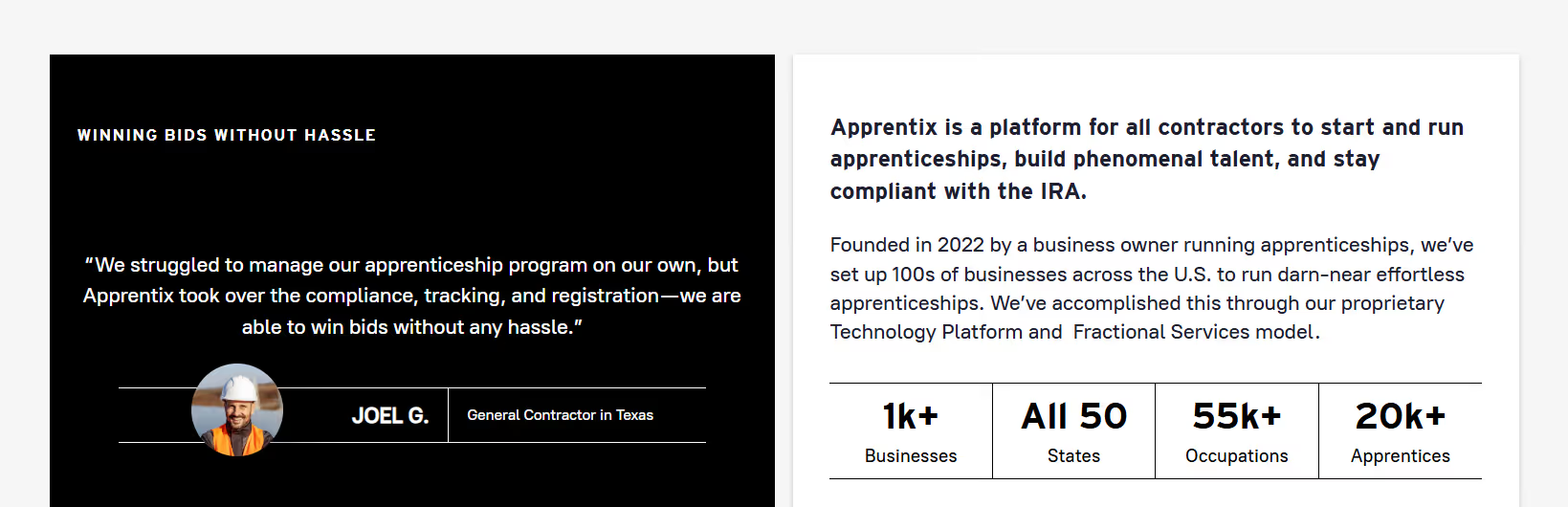
Apprentix is a Fractional Sponsor that covers Electrician as one of our seven registered occupations. We’ve helped more than 1,000 non-union contractors on IRA projects get their apprentices registered and compliant in days rather than the months.
This determines who you deal with and how long registration takes.
The U.S. runs two parallel systems for apprenticeship registration. About 25 states are OA states, where the federal Office of Apprenticeship handles everything through RAPIDS and standardized federal forms. About 29 states plus D.C. are SAA states, where a State Apprenticeship Agency runs its own process with its own forms and its own timeline.
Why it matters:
If you are self-registering, expect 2 to 6 months total in OA states (including the development phase) and 3 to 12+ months in SAA states depending on the state.
If you are joining an existing group program or working with a Fractional Sponsor, much of this timeline is much shorter (more on that later).
Before you touch any paperwork, decide how you want to get into a registered program. This choice determines everything else: your timeline, your administrative load, and how much of the process you handle yourself.
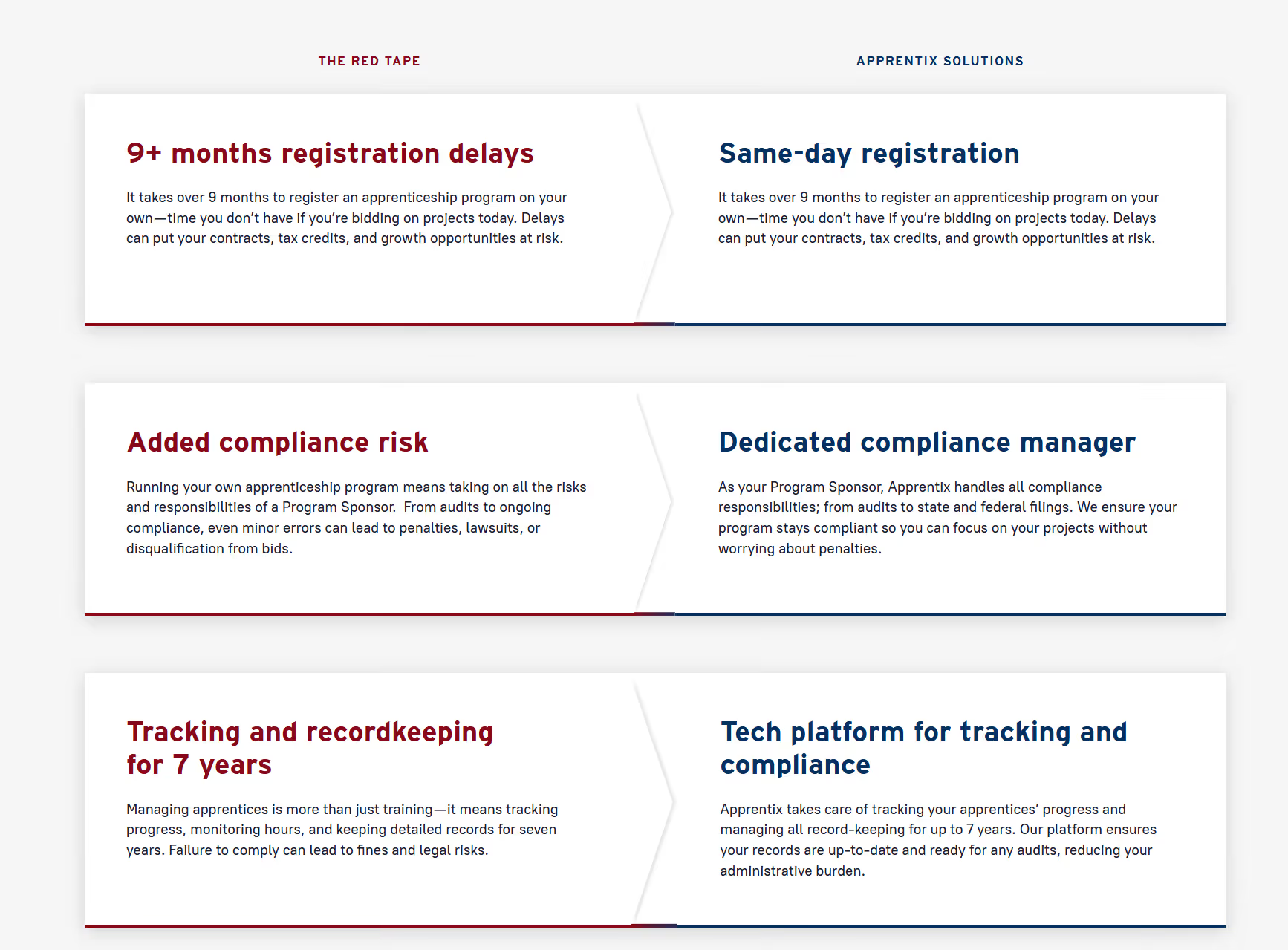
For most non-union contractors, the real decision is between the first three.
Do this before you start the registration process, not after. Electrical is the one trade where your Registration Agency will not approve your program without a credible RTI plan, and the provider you choose shapes your curriculum outline, your annual hour targets, and your schedule.
Your main options for non-union programs:

Many programs combine online theory with in-person practical sessions, but on-demand online delivery is the only realistic option for traveling crews. Make sure your Registration Agency accepts your delivery model before you commit.
One more thing. Every RTI instructor must either hold state vocational-technical credentials or be a recognized subject matter expert (like a licensed journeyworker) with training in teaching techniques. Some states go further. New Hampshire requires instructors to be currently licensed electricians. Michigan requires RTI providers to be approved by the state Electrical Administrative Board. Confirm the requirements in your state before you sign a contract with a provider.
The Work Process Schedule (Appendix A) maps every skill your apprentices will learn on the job and how many OJT hours are allocated to each. For an 8,000-hour electrical program, expect 20 to 25 distinct categories.
A typical allocation:
If you are joining a group program or working with a Fractional Sponsor, the schedule is already built and DoL-approved. Skip this step. If you are self-registering, the DoL Standards Builder tool provides frameworks, and both IEC and IBEW/NECA publish model standards you can adapt.
Either way, make sure the schedule reflects the work your apprentices will actually do. Auditors compare logged hours against each category. An apprentice with 4,000 hours in conduit and zero in fire alarm, motors, or controls will generate a finding.
Electrical apprentice wages are expressed as percentages of the journeyworker rate, increasing as the apprentice gains hours and completes RTI milestones. A typical non-union four-year schedule with increases every 1,000 hours:
The exact percentages and step intervals vary by program. What matters is that the schedule is defined in your registered standards, because that is what auditors enforce.
On prevailing wage and IRA projects, the math gets specific. If the Davis-Bacon rate for electricians on your project is $45/hour and your apprentice is in a 50% period, the minimum is $22.50/hour.
If your program standards do not address fringe benefits, the full fringe amount from the wage determination must be paid on top. And if an apprentice is working outside the approved ratio on any given day, they must be paid the full journeyworker rate for that day.
If you are joining a group program or using a Fractional Sponsor, this is handled for you. The sponsor submits the registration and gets your apprentices into the system. For Fractional Sponsor clients, this can happen the same day you enroll.
If you are self-registering, your package includes:
In OA states, you work with an Apprenticeship Training Representative to finalize your standards, then submit through the Standards Builder tool. The 30-day clock starts when your final signed standards go in. In SAA states, you follow the state's own forms and process, on the state's own timeline.
Once your program is approved (or once your sponsor has you enrolled), you can start registering individual apprentices.
Each one needs a signed apprenticeship agreement (ETA Form 671 in OA states) filed with the Registration Agency within 45 days of their start date. The agreement captures the apprentice's information, the occupation, the training approach, the wage schedule, and the signatures of the apprentice and sponsor.
For contractors on IRA projects, do not overlook this.
Until the agreement is filed, the worker is not a registered apprentice. Their hours do not count toward the 15% threshold. Paying them the apprentice wage rate on a prevailing wage project is a violation from the first hour. Get agreements filed immediately, not at the end of the month.
This is the step that catches multi-state contractors.
DoL apprenticeship registration and state electrical licensing are completely separate systems. Being registered as an apprentice with the DoL does not authorize your worker to perform electrical work in a given state.
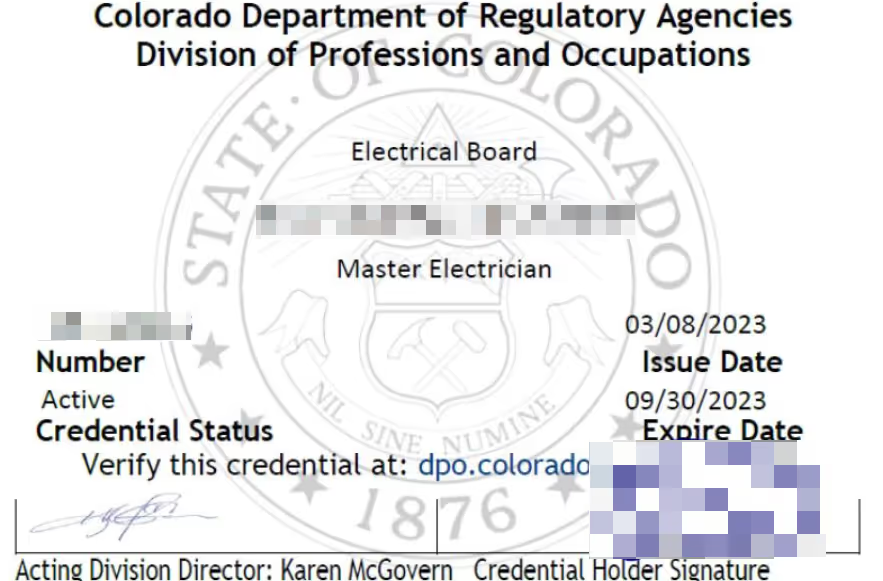
Most states that license electricians require a separate state-issued apprentice card or registration. Texas requires an Electrical Apprentice License from TDLR. Washington issues an electrical training certificate with biennial renewal and proof of 48 classroom hours. Colorado mandates state registration within 30 days of employment. Michigan has similar requirements with heavy fines for non-compliance.
Some states have no statewide electrical licensing at all. Arizona, Illinois, and Pennsylvania delegate it to local jurisdictions.
If you work across state lines, you need to confirm two things independently:
An apprentice registered in your Oregon-based program who travels to Washington needs a separate Washington electrical trainee card. The DoL registration does not cover it.
Apprentix covers Electrician as one of our seven registered occupations and can get your apprentices registered in days, not months. We handle the DoL compliance, connect you with affordable RTI providers, and manage multi-state reciprocity so you do not have to navigate the licensing patchwork on your own.
Schedule a call to get started.







Cat Food, Care & Advice
Webflow Development Agency REtainer Design Figma
Stage 1 Bt Botosani Chiptuning
Diagnoze Botosani Cai putere DYNO Romania
Carne Maturata Antricot Vrabioara Filet Carne Vita
Mobila OUTLET Canapele Paturi Coltare
Transport Marfa si Agabaritic Romania
Transport Agabaritic și Special
Transport marfă internațional și intern Spedition

