

A step-by-step guide for construction contractors on IRA projects to prepare for DoL apprenticeship program reviews and IRS compliance audits.



Every registered apprenticeship program gets reviewed by the DoL at least once every five years. On IRA projects, the IRS can pull your records when the project owner claims the enhanced tax credit, and the owner's compliance firm is checking your apprentice registrations, wages, and ratios every pay period throughout the build.
If you are working on an IRA project, you are already being audited. The owner's compliance firm reviews your apprentice registrations, wages, and ratios on every pay cycle. Most contractors don't think of that as an audit, but it is, and it is the one most likely to hold up payment.
The two formal audits sit on top of that. The Department of Labor reviews your registered program through an Apprenticeship Program Review (APR). The IRS, separately, can examine the project owner's tax return after they claim the enhanced credit, which pulls every contractor on the project into scope. Three reviewers, different timing, different penalties, but a lot of overlap in the records they want to see.
This guide covers what triggers each type of review, what reviewers focus on, where contractors most commonly get caught, and the steps you can take now so audits are routine instead of a scramble.

Apprentix is a Fractional Sponsor for non-union construction contractors on IRA projects. We manage apprenticeship compliance across 48 states, which means audit readiness is not something we think about once a year. It is how we operate every day.
DoL program reviews happen on a schedule. New programs get reviewed after their one-year provisional period. Permanent programs get reviewed at least every five years. But the DoL also runs unscheduled reviews when it sees red flags, things like:
In OA states, federal DoL staff show up. In SAA states like Florida, North Carolina, and Louisiana, the state apprenticeship agency handles it.
IRS audits work differently, and they are not aimed at you. The IRS reviews the project owner's tax return after they claim the enhanced credit, since the owner is the taxpayer receiving the benefit. But to verify the credit, the IRS examines whether every contractor on the project met the prevailing wage and apprenticeship requirements.
That means your payroll records, your apprentice registrations, your ratio logs, and your wages are all in scope, even though the audit is technically of someone else's return. There is no heads-up and no pre-filing review. The IRS can pull records, visit the jobsite, and talk to workers.
Compliance firm reviews are the layer most contractors run into first, and most often. On nearly every IRA project, the owner or developer hires a third-party IRA compliance firm to monitor prevailing wage and apprenticeship requirements throughout the build. The owner has direct financial exposure here: if the project fails compliance, the owner loses the enhanced tax credit. So the compliance firm's job is to catch problems before they reach the IRS.
On the apprenticeship side, compliance firms typically verify:
Reviews happen continuously, often tied to weekly or biweekly certified payroll submissions. Findings are sent back to your office for correction, and unresolved issues can hold up payment. For most contractors on IRA projects, this is the audit that matters day to day. The DoL review comes on a five-year cycle. The IRS audit only comes if the owner gets examined. The compliance firm is checking your work right now.
Both the DoL and IRS care about the same core documentation, organized across seven areas. Some of these get more scrutiny than others.
Every apprentice needs a signed agreement (ETA Form 671) filed with the registration agency within 45 days of their start date. Completions, cancellations, and transfers also carry a 45-day filing window. Auditors check that paperwork is complete, properly signed, and on time. This is table stakes. If an apprentice is not registered, their hours do not count for any compliance purpose, and paying them the apprentice wage rate on a prevailing wage project becomes a violation from day one.
This is where most programs get tripped up. Your Work Process Schedule defines the skills apprentices need to learn and roughly how many hours they should spend on each. Auditors want to see:
RAPIDS does not track OJT hours. That falls entirely on the sponsor and employer.
Your program standards include a schedule of wage increases tied to training milestones. Auditors pull payroll records and compare them to the registered schedule. Did the raise happen on time? Is the rate correct?
On prevailing wage projects, the math gets more specific. The apprentice rate is a percentage of the Davis-Bacon journeyworker rate from the applicable wage determination on SAM.gov. If the program standards do not address fringe benefits, the full fringe amount from the wage determination must be paid. Wage progression errors are an explicit ground for program deregistration.
Your program standards set a ratio, and auditors verify you maintained it. The common mistakes here are predictable:
On IRA projects, the daily enforcement is what matters. If the ratio is off on a given day, those excess apprentice hours are permanently excluded from your 15% labor hour calculation, and the apprentices must be paid full journeyworker rates for that day.
The benchmark is 144 hours per year. Auditors check attendance records, course outlines, and instructor qualifications. Smaller programs struggle with this more than anything else, usually because scheduling is inconsistent and records are incomplete.
Every program needs an Equal Opportunity Pledge and a designated EEO contact. Programs with five or more apprentices need a written Affirmative Action Plan covering workforce analysis, utilization goals, and outreach efforts. This is reviewed through additional checklists during an Extended APR.
Five years minimum under federal rules. For IRA projects, plan on six to seven years given the IRS statute of limitations. That covers apprentice agreements, training logs, payroll, selection documents, demographic data, and all correspondence with the registration agency.
This is the fastest check and the most important.
Pull your active apprentice list and confirm each one has a registered agreement in RAPIDS or your state system. Were all agreements filed within 45 days? Were any cancellations or transfers reported late? If anything is missing, fix it now. An unregistered apprentice is a compliance problem that touches everything else.
This one takes more time, but it is where auditors spend the most attention.
For each apprentice, compare logged hours to the Work Process Schedule. Are they progressing through all the required skill areas, or have they been doing the same work for six months straight? Anyone falling behind needs a plan to catch up. On IRA projects, run the math on your total apprentice labor hours as a percentage of total project hours.
If you are below 15%, you want to know that now, not at tax time.
Pull payroll for every apprentice. Compare current rates to the registered wage schedule. Confirm every step increase happened when it should have.
On prevailing wage projects, this gets more involved. You need to verify:
This is one of the most common audit findings. A missed wage increase is straightforward to catch internally and painful to explain to an auditor.
Go through your staffing records day by day. For each day an apprentice was on the jobsite, confirm the ratio held for their trade. This does not need to be complicated, but it does need to be daily. Weekly averages will not satisfy an auditor.
Quick check. For each apprentice, are they on pace for 144 hours this year? Do you have attendance records? Can you produce the instructor's qualifications if asked? If your RTI is delivered by a third party or online, make sure you actually have their records in your files, not just an assumption that the provider is tracking it.
If your program has fewer than five apprentices, this is straightforward:
If you have five or more, the requirements expand.
Your written Affirmative Action Plan needs to include workforce analysis, utilization goals, and documentation of outreach. This is the single most commonly flagged area during Extended APRs, largely because sponsors build the plan at registration and never update it.
Not glamorous, but necessary. Every record from the past five years (six to seven for IRA projects) should be accessible and organized. Apprentice agreements, training logs, payroll, selection documents, demographic data, correspondence, and for IRA projects, your Form 7220 backup: total labor hours by trade, apprentice hours by trade, daily ratio logs, and wage determinations.
If an auditor asks for a file and you can produce it in minutes instead of days, the rest of the review tends to go smoothly.
Everything above applies to any registered apprenticeship program. IRA projects add three IRS-specific concerns:
Here is the good news: if you identify a shortfall and make the correction payment before the IRS contacts you about an examination, you get a rebuttable presumption that the failure was not intentional. Quarterly self-audits are the mechanism that makes that possible.
When you work with a Fractional Sponsor like Apprentix, the heaviest compliance work is off your plate before an auditor ever gets involved.
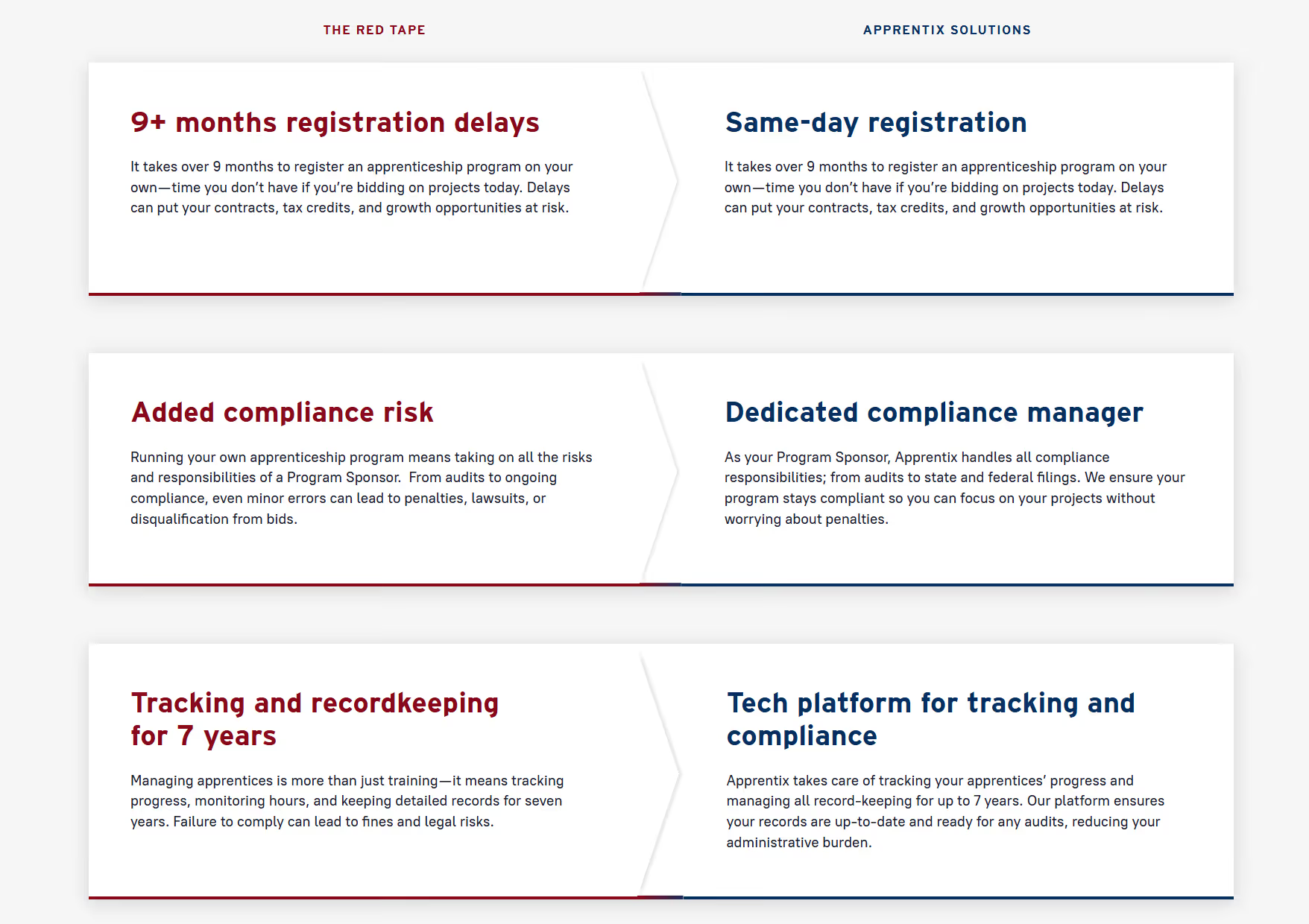
We handle program registration, file all apprenticeship agreements within the 45-day window, coordinate Related Technical Instruction, maintain the Affirmative Action Plan, keep RAPIDS data current, and serve as the primary point of contact if the DoL schedules a review.
But a sponsor relationship does not eliminate your role entirely. On your jobsite, you are still responsible for the items the owner's compliance firm checks every pay period:
Apprentix tracks and monitors these areas through our platform, giving you visibility into where you stand and flagging issues before they show up in a compliance firm finding, a DoL review, or an IRS examination. But the underlying records still need to come from your jobsite.
Apprentix handles the compliance burden so you can focus on building. Talk to our team about how the Fractional Sponsor model works.
Schedule a call today.




Cat Food, Care & Advice
Webflow Development Agency REtainer Design Figma
Stage 1 Bt Botosani Chiptuning
Diagnoze Botosani Cai putere DYNO Romania
Carne Maturata Antricot Vrabioara Filet Carne Vita
Mobila OUTLET Canapele Paturi Coltare
Transport Marfa si Agabaritic Romania
Transport Agabaritic și Special
Transport marfă internațional și intern Spedition

