

Learn how wraparound services help employers retain apprenticeships and strengthen their workforce overall.



While maintaining a healthy work/life balance is the ultimate goal for American workers – that balance is incredibly delicate and vulnerable. Fitting in reliable transportation, childcare, continuing education, and all of life's other tiresome duties into a work schedule is nearly as stressful as a job itself. A broken-down car or a sick babysitter not only throws off the balance but can create a ripple effect of other consequences.
The same is true for apprentices, especially those from low socioeconomic backgrounds. That's why Apprentix has built-in functionality to help businesses define wraparound services so apprentices can focus on graduating.
A wraparound service is non-job support an employer or program sponsor provides so apprentices can stay in the program: help with the life logistics that otherwise push people out of training. The five common categories are financial and stipend support, childcare, transportation, tools and gear, and mentoring alongside mental health support.
The definition of wrap around services varies depending on what each organization offers. Wrap around services can be programs that assist childcare, transportation, or food security. They can also be free or low-cost resources like therapy, utility payment assistance, or technical literacy classes.
While offering wrap around services is simply the right thing to do, they also play a vital role in graduating your apprentices. An apprenticeship is an investment that will lead to a full-time employee – so it's in your best interest to ensure they have the tools they need to graduate.
An apprenticeship program is a two-way street; apprentices can only achieve their full potential if their basic needs are met.
Supportive services aren't theory for us: they're a standing option in every apprenticeship program Apprentix sponsors, and the mentoring side is built on our founder's fifteen years running a mentoring organization that helped thousands of low-income young people reach college on scholarships. What follows is what we've seen actually keep apprentices on the job.
Various wraparound service options are available for your organization, depending on the needs of your apprentices and workers.
While many companies with full-time employees offer health insurance benefits, not all provide wraparound services for mental health. Why is this important? Studies have found that poor mental health contributes to employee turnover, job-related accidents, and lower productivity.
It's important to establish open communication with apprentices and show them you value the work they do. Apprentices who are happy in the workplace are primed to learn and will retain more information. However, there's only so much influence a workplace can have. Life inevitably gets in the way. By offering mental wellness programs such as subsidized costs for online therapy, you're signaling to apprentices that you care about them and want them to stay.
Commuting is a huge challenge for many American workers, especially those who live in city centers but have jobs in the suburbs or areas without robust public transportation systems.
A Leadership Conference Education Fund report found that isolation from job growth also happens in suburbia. The growing population of lower-income suburbanites is also disconnected from new job growth, which takes place mostly in higher-income suburban areas.
Wraparound transportation services are key to making your apprenticeship program more equitable. Offering employee shuttles or stipends for busses, trains, taxis, or ride-share services is an excellent solution for apprentices who don't have their own means of transportation. It also ensures they arrive to work on time and relieves the stress of having to pay out of pocket for their own travels.
In a 2022 Pew Research study, half of the working parents surveyed said handling child care and work was incredibly difficult. The cost of childcare is rising, and many young families do not have backup plans if their childcare falls through. Parents are now paying an average of $13,128 a year for child care, according to Child Care Aware of America's 2024 Price of Care report. That price tag is simply too high for many families – especially those from low socioeconomic backgrounds.
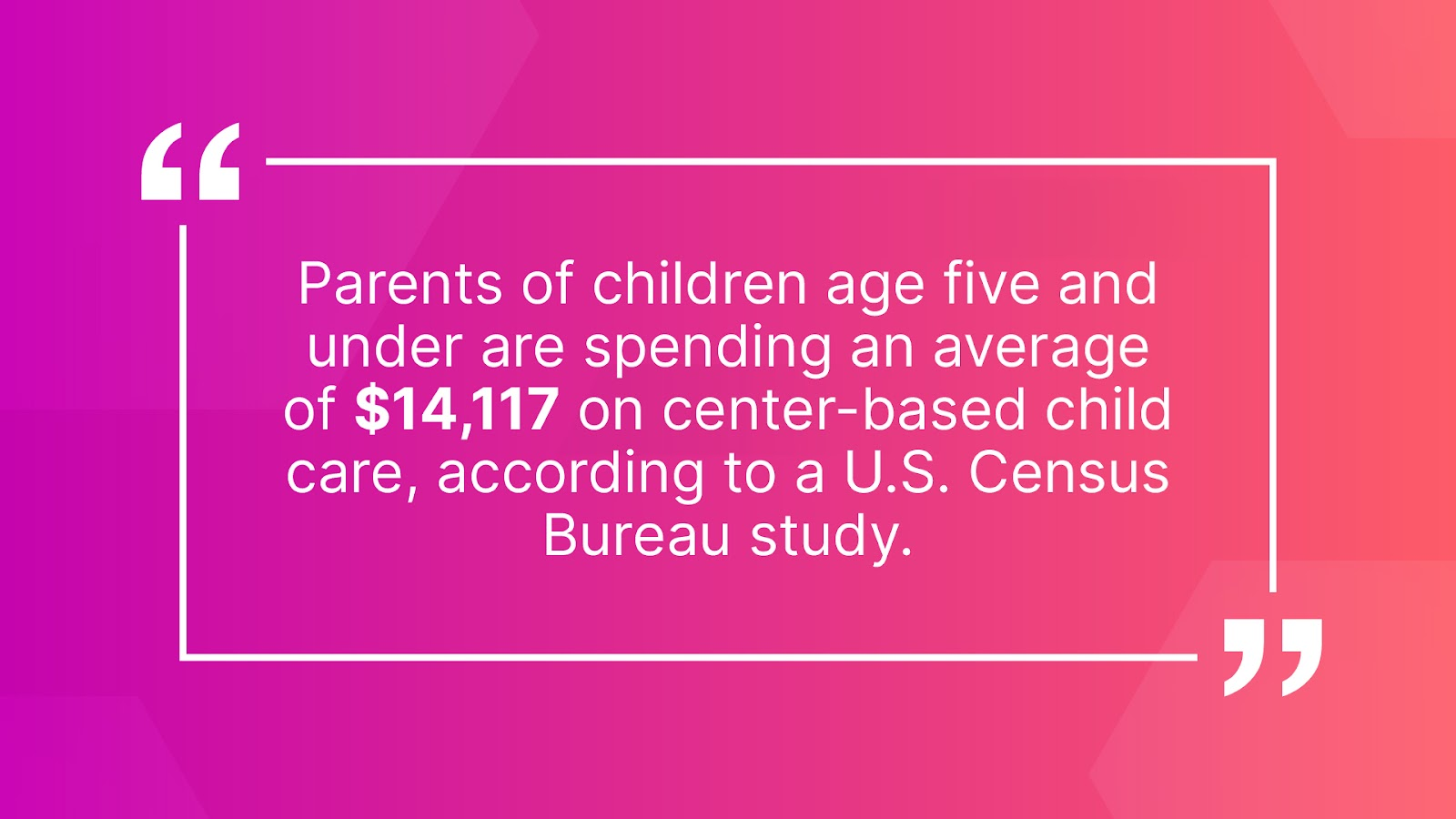
Often young families, especially women, are forced to choose between spending money on childcare or leaving the workforce altogether due to high costs, limited availability, or inconvenient program hours.
There are many ways employers can offer wraparound child care benefits to help alleviate this stress:
Money pressure ends more apprenticeships than skill ever does, especially in the early periods when apprentices earn a percentage of the journeyworker rate. Financial wraparound support is any program that bridges that gap: living stipends during the first months, emergency or hardship funds for the broken-down car and the surprise bill, pay continuation or partial stipends during classroom weeks, and reimbursement of licence and testing fees. None of it needs to be extravagant. A modest emergency fund that answers in days keeps an apprentice on the crew, while a two-week financial hole quietly turns into a resignation.
The most concrete category, and usually the cheapest to offer. A first-period apprentice may be asked to show up with work boots, hand tools, and safety gear before their first full paycheck arrives, and in some occupations a laptop for the classroom side. Covering or fronting that kit costs an employer a few hundred dollars per apprentice and removes the most avoidable first-week dropout there is: the person who couldn't afford to start. Boot allowances, tool stipends with a payback-free vesting period, and employer-provided PPE all count.
This is different from the journeyworker mentor your program standards already require. That role is technical supervision: teaching the trade and signing off competencies. Wraparound mentoring is the pastoral layer: someone an apprentice can talk to who isn't their boss, peer groups of apprentices at the same stage, and regular check-ins that catch a wobble before it becomes a quit. Where the required mentor keeps the training compliant, this layer keeps the person in the trade. How mentorship fits into your program standards is covered in our guide to designing apprenticeship programs.
By offering wraparound services to apprentices, you're showing with your actions that you care about their success. In return, apprentices have less stress and are free to focus on performing well and completing their apprenticeship program. This is not only critical to your bottom line, but it also proves your organization walks the walk on DEI.
In other words, if you know an apprentice comes from a marginalized community that faces specific challenges, you have the knowledge you need to shift your program to alleviate stress from said challenge before it presents itself in the workplace. This proactive approach will draw in more talent from diverse communities, thus strengthening your workforce and propping up your company as a recognized leader in employee satisfaction.
The completion numbers back this up. Research sponsored by the US Department of Labor found that apprenticeship programs providing childcare see completion rates around 11 percent higher, and programs subsidizing transportation around 7 percent higher (AIR, Improving Apprenticeship Completion Rates, 2023). For a program that costs real money per apprentice, the cheapest completion you'll ever buy is the one you didn't lose.
And wraparound costs are frequently not out-of-pocket costs. Several public programs fund exactly this: Harris County's Apprenticeship Advantage program pairs apprenticeships with wraparound support, New York's Empire State Development runs grants for apprenticeship wraparound supports, and states like Wisconsin fund similar programs. If you're building a program, it's worth asking your state apprenticeship office and workforce board what support funding exists before assuming you're paying for all of it yourself.
Selecting wraparound services with Apprentix is easy. Learn how here.
Any non-job support that removes a barrier between an apprentice and completing their program. The five common categories are financial and stipend support, childcare, transportation, tools and gear, and mentoring and mental health support.
No. They're entirely optional, and nothing in the registration requirements mandates them. Employers offer them because completion economics favor it: losing a trained second-year apprentice costs far more than the supports that would have kept them.
Often, yes. County, state, and workforce-board programs regularly fund apprentice supports, from Harris County's Apprenticeship Advantage to New York's Empire State Development wraparound grants. Availability varies by state and year, so check with your state apprenticeship office before budgeting.
Yes, measurably. DOL-sponsored research found childcare support associated with completion rates around 11 percent higher and transportation subsidies around 7 percent higher. Support that targets the reason your apprentices actually leave is the lever.
Wraparound services are a standing part of every program Apprentix sponsors, so if you'd rather offer them than administer them, that's exactly the point of the service.






Cat Food, Care & Advice
Webflow Development Agency REtainer Design Figma
Stage 1 Bt Botosani Chiptuning
Diagnoze Botosani Cai putere DYNO Romania
Carne Maturata Antricot Vrabioara Filet Carne Vita
Mobila OUTLET Canapele Paturi Coltare
Transport Marfa si Agabaritic Romania
Transport Agabaritic și Special
Transport marfă internațional și intern Spedition

